Including an “interests and activities” section in your resume can be a wise move. If done properly, it can demonstrate your skills and other positive attributes that aren’t mentioned elsewhere in your resume. The range of these activities can include your participation in student clubs, voluntary work or school events, to hobbies and pastimes.
Additionally, it also helps recruiters to gauge your personality and assess if you’ll be a good fit for the company culture-wise (yes, evaluation of workplace culture and whether you’ll fit in goes both ways!), you’ll have a bigger chance of standing out from other applicants. You might even increase your chances of a successful application!
But just because your pastimes and interests can help recruiters come to a decision doesn’t mean that you should list every single hobby. You still need to be mindful and discerning of what message you want to send out through listing your interests, so customise the section for every role you apply to. For instance, if you applied for a marketing role and enjoy creating desktop or phone wallpapers in your spare time, you’ll be implying that you’re a creative who’s well-suited to the role. In contrast, saying that you find joy in reorganising libraries may point to the opposite.
So don’t be afraid to make your application unique and eye-catching to hiring managers!
What to include
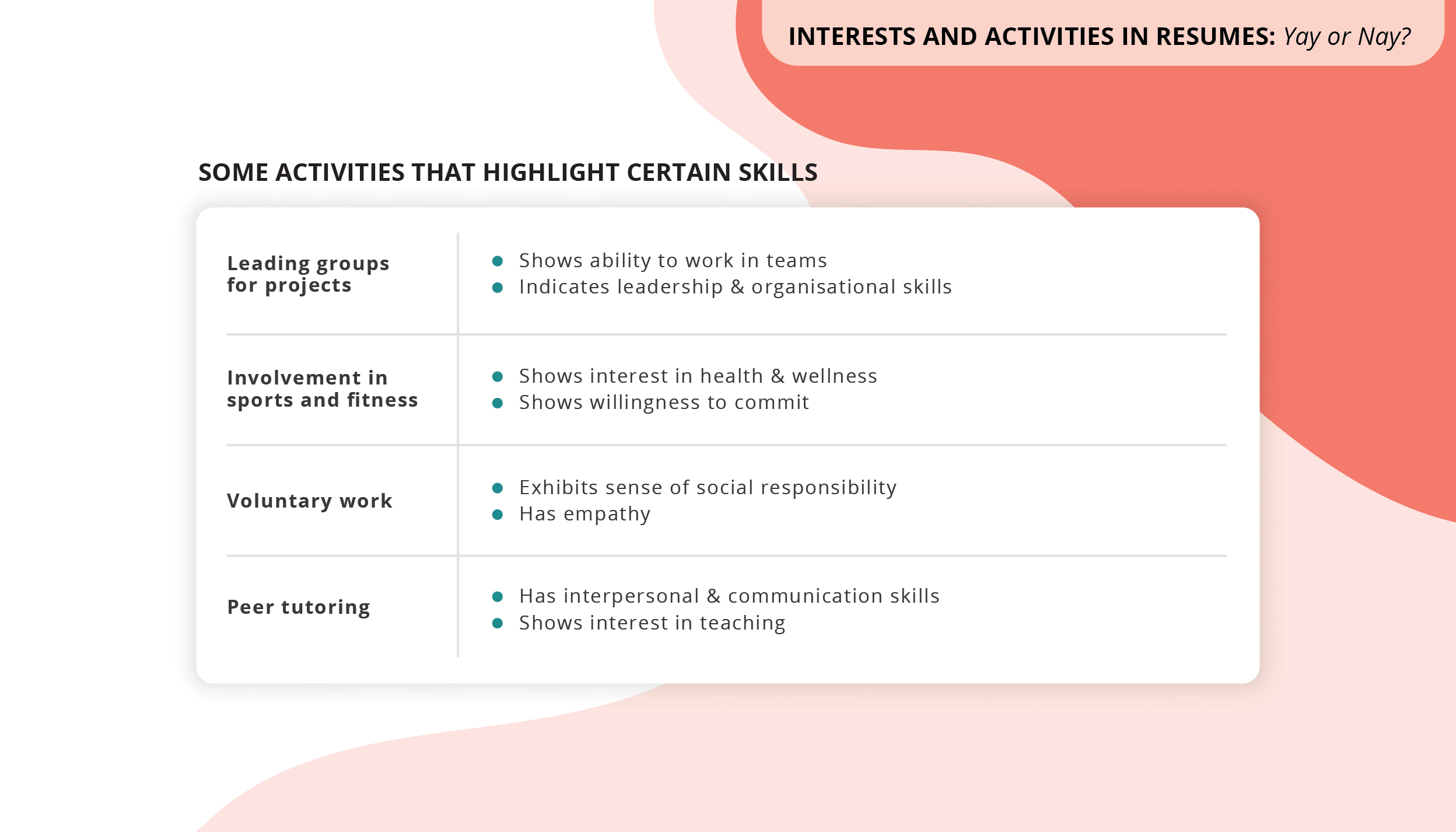
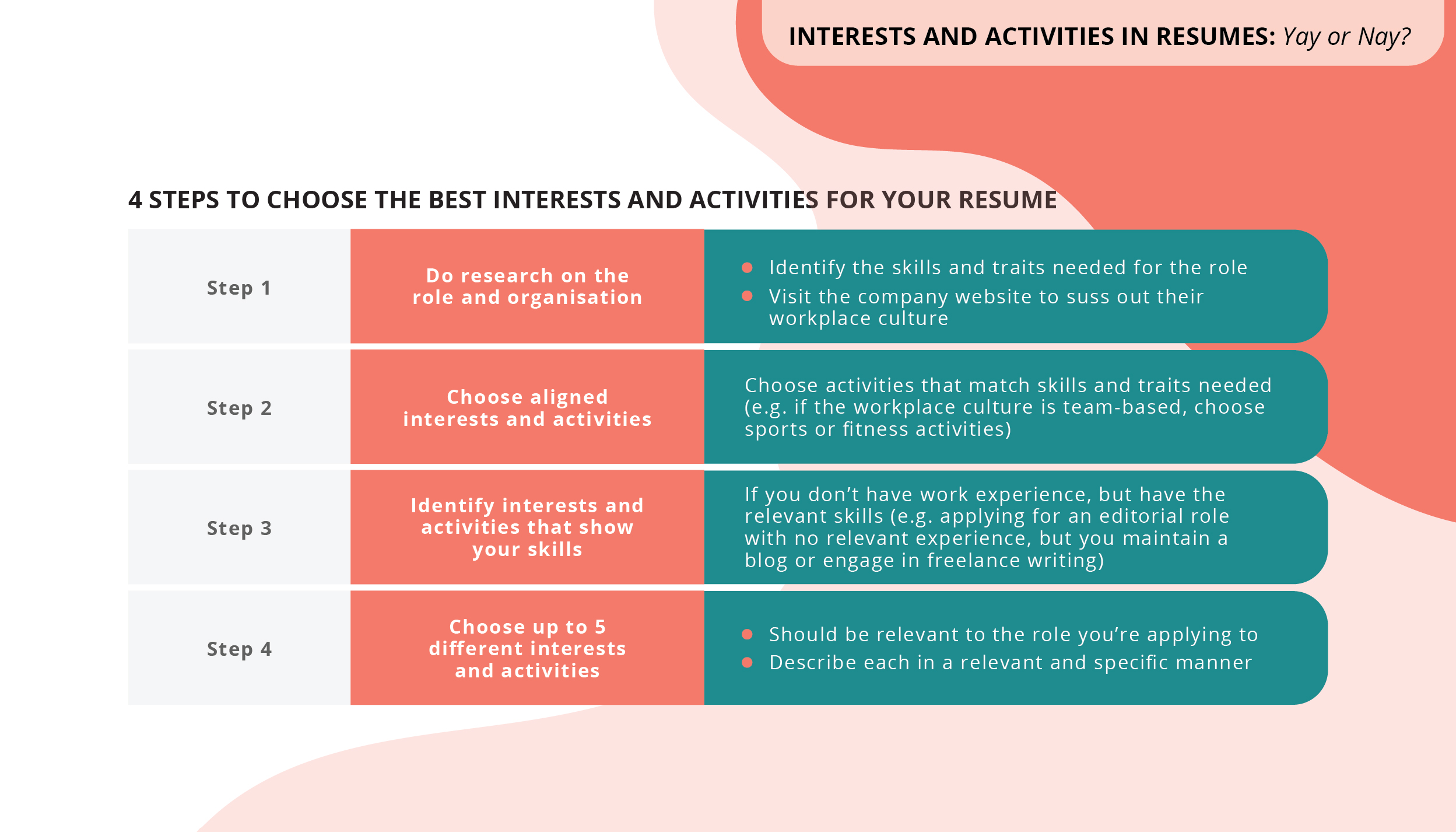
Think about the skills and traits that are relevant to the job or industry you’re interested to be a part of, and which can’t be linked to mentioned academic achievements or certificates you’ve earned. What you list in your “interests and activities” section should align with those.
For example, if you’re applying for a role in computer programming but hold a degree in business analytics, mentioning activities such as participating in hackathons, learning coding languages, or developing a computer game will show that you have a genuine interest in the field of work, and that you’re proactive in cultivating new skills beyond just what you learnt in school.
What to avoid
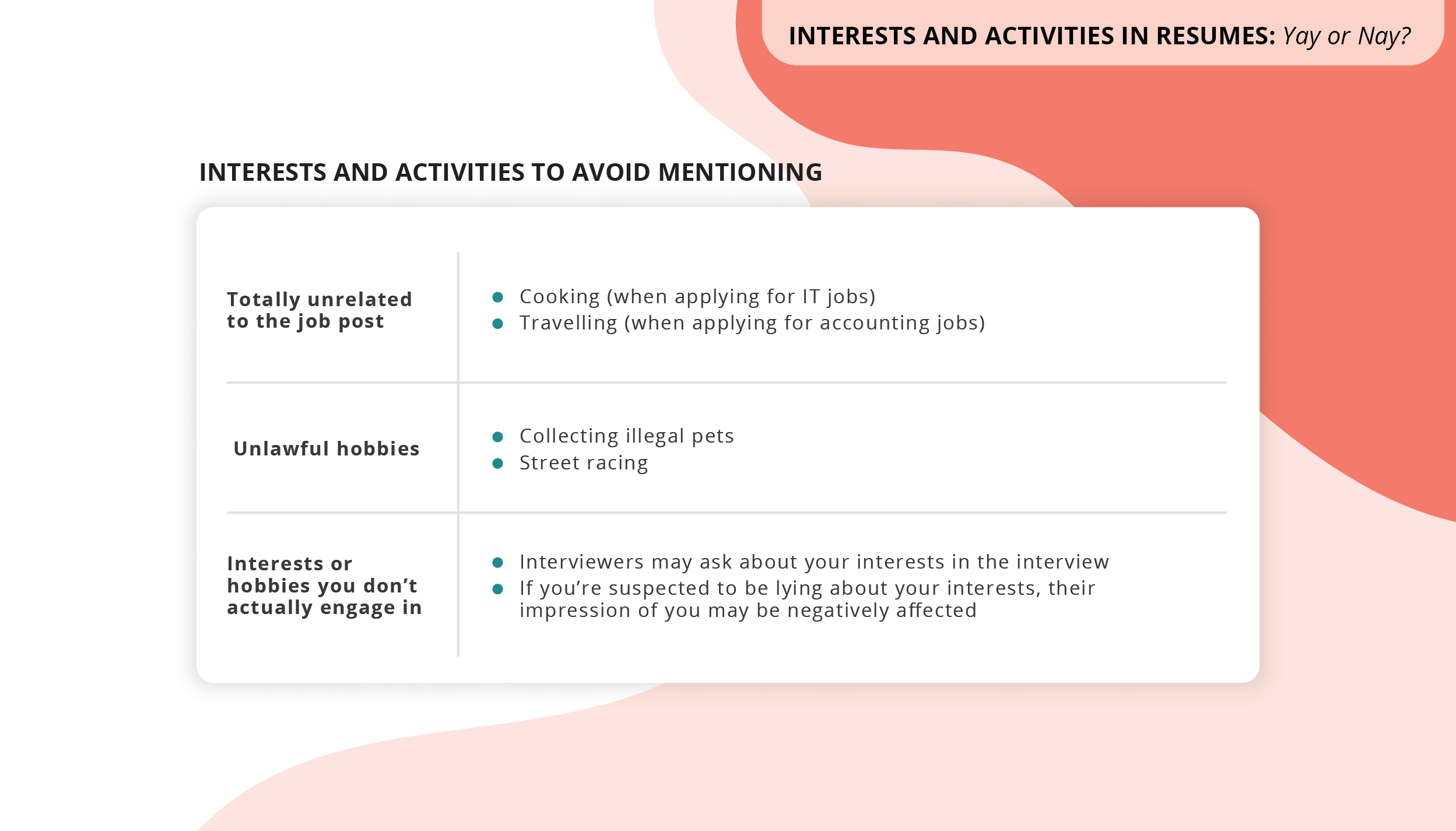
Try not to include any interests or activities that are political or religious in nature for your resume. Interests and activities can be interpreted subjectively, and you don’t know whether the person viewing your resume may have strong views on such topics.
An easy way to remember this is to think about how you socialise with strangers in a professional setting – like in (virtual or physical) networking sessions. You don’t jump into sensitive topics in those settings. In the same vein, when you present your resume to a hiring manager or recruiter, it’s very much like meeting a stranger.
How and where to list interests and activities in your resume
Before you start throwing all your interests and activities in your resume, make sure the section doesn’t take away from more prominent sections that detail your skills, education and professional experience.
Your “interests and activities” section should be at the end of your resume. Since an ideal resume for a fresh graduate should be one page long, only include interests and activities that complement it. Descriptions should also be short and concise.
Other considerations
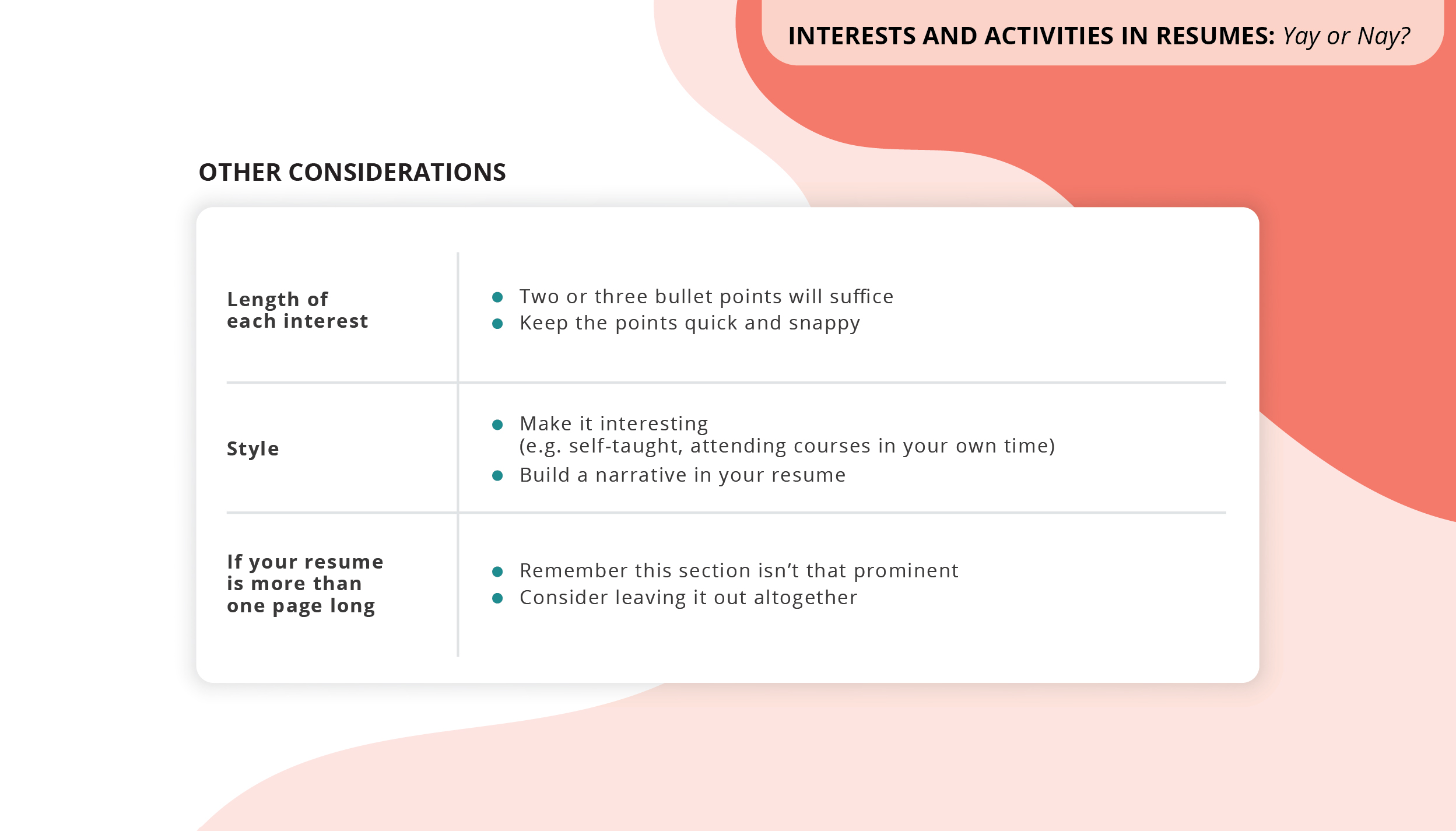
Besides the factors listed above, there are other things to think about in regards to your “interests and activities” section. For instance, how you name this section is something you should consider as part of the overall presentation of your resume. So if you think the word “hobbies” on your resume may have a childish connotation, avoid using it altogether and stick to the more professional-sounding “areas of interest” or “extracurricular activities and other information”.
If you don’t have anything relevant to write about for your interests and activities, there’s no need to force it! As mentioned earlier, faking it won’t help you in any way, and may even work against you. Recruiters always ask questions on the information you put on your resume during the interview stage, and if you’re caught exaggerating or lying about your interests and activities, you’re making a statement about your character that may result in losing the job opportunity entirely. Instead, draw your interests from what you actually enjoy doing in your daily life – you never know, the interests you have may just give you the edge against your competitors!