Being a self-employed independent worker or contractor means earning income based on projects, otherwise known as a freelancer. During the COVID-19 pandemic, this alternative career route has seen a rising numbers of freelancers, as documented by the Ministry of Manpower.
However, freelancing isn’t just a career opportunity during hard times. It’s about going beyond the usual 9-to-5 grind. It’s about the challenge and thrill of sourcing your own projects and providing services to others call to you. You want to run your own business, be your own boss and spread your wings and fly.
But hold on, before you get ahead of yourself, you have to get down and dirty with the basics of freelancing.
Starting off
Each career path requires specific skillsets to tackle its own set of unique challenges. Similarly, before you even step onto the freelancing path, you have to recognise a number of necessary qualities that you need to become a successful freelancer in order to keep to deadlines and juggle several projects simultaneously.
This generally means hopping on existing platforms (e.g. Upwork) or tapping on your networks to match with clients for ad-hoc projects or tasks. Whether you’re an expert in graphic design, technical writing, or PowerPoint design, there’s likely someone out there looking for your skill sets.
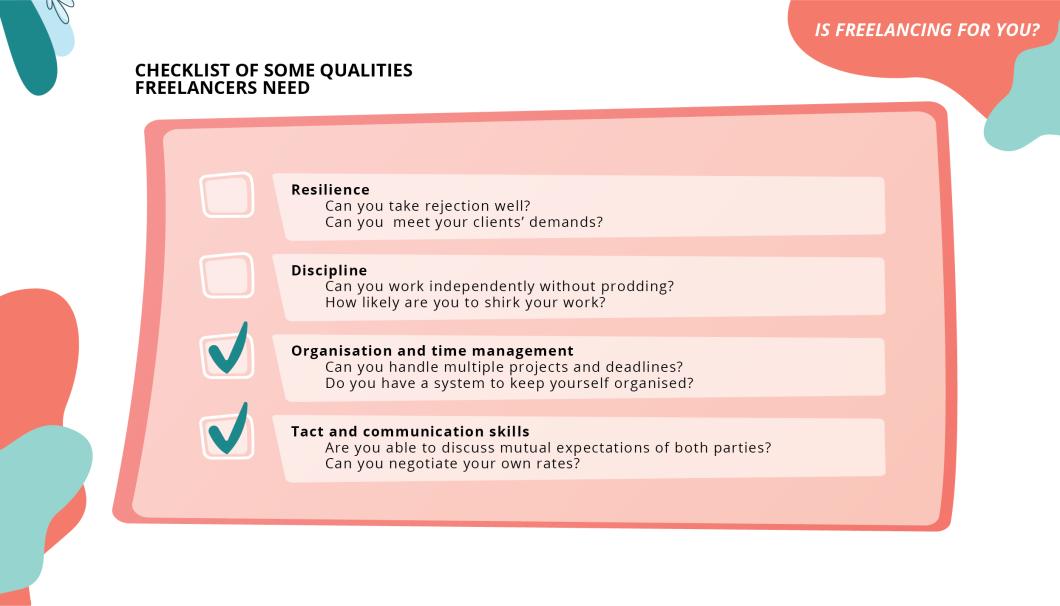
The payment for each of your tasks varies between the different clients and job scopes. The success of your freelance jobs is dependent on the quality of your work within the given timeline. This means some evenings with friends and family may have to be sacrificed if you need to meet an impending deadline.
Some freelance platforms require some monetary fee to bid for projects. Alternatively, you may wish to dedicate your time and efforts to networking to reach out to potential clients.
The harsh realities
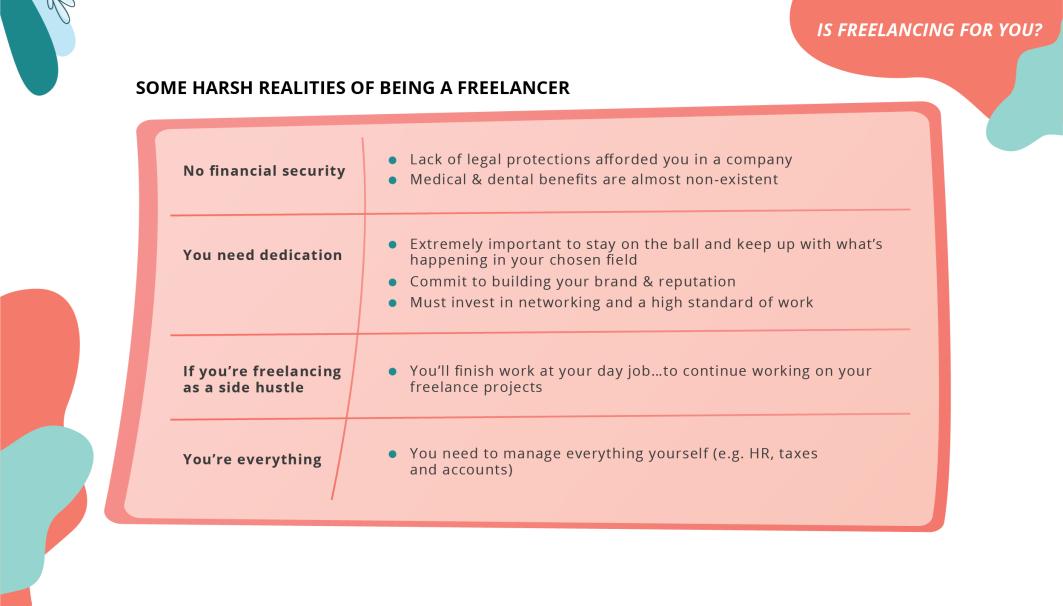
The idea of freelancing and being your own boss may be an attractive one, but there are some realities you’ll also need to take note of. For instance, you should understand that clients can come and go very quickly, so you’ll have to keep up a steady stream of income to save for a rainy day.
For that, you’ll need to aim for at least two steady or high-paying jobs and a few other gigs. But with so many clients and jobs, prepare to forego 40-hour weeks – your hours may even hit 70.
Constant learning
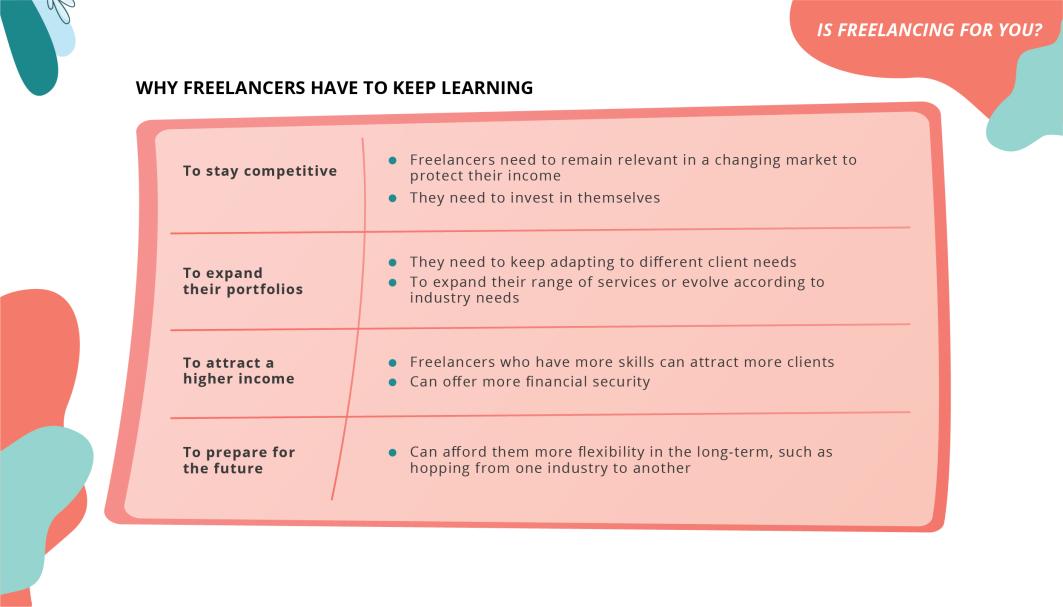
The moment you step into the freelance world, the first thing you’ll notice is that you don’t know everything you should about your area of work. The second thing you’ll see is that most freelancers specialise in a niche area and only offer specific services.
Those two points are connected – in order to be a successful freelancer, you need to become very well-versed in your chosen area of work and maintain an edge over the competition and beat out even artificial intelligence (AI) – that has affected 56% of the workforce (and freelancers will be among those affected). This is crucial if you never want to fall behind, so take all the chances you can get to expand your knowledge and experience, even if it’s by networking with other freelancers.
Finances
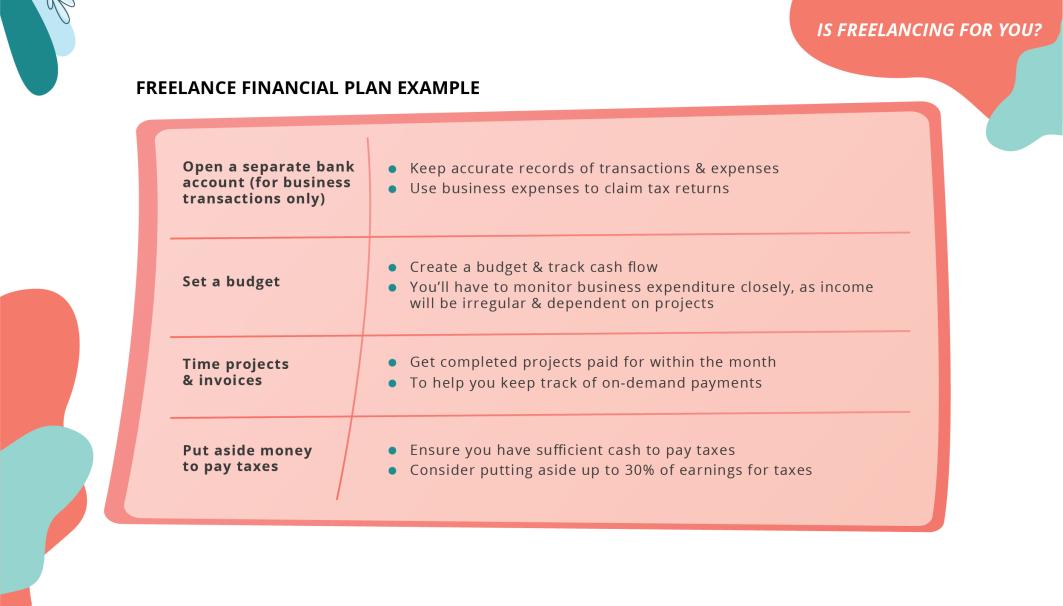
Freelancers don’t automatically get health care and employee perks. You’ll have to handle them all by yourself, and out of your own income from your freelancing activities.
Keep in mind that your taxes won’t pay themselves, either. You’ll also have to come up with your own financial plan and targets to figure out what your expenses are and how much you need to live comfortably.
Work to live or live to work?
If your main priority is still to gain full-time employment soon, then don’t get too distracted by your side hustle. Once you get into the groove of things, there’s a chance you could be taking on more clients than your time allows, thus limiting your job hunting opportunities.
Make a weekly timetable to review the time spent on your side hustle and job hunt. If you notice that you’re spending less time applying for jobs, then attempt to scale back your freelancing job. However, if you want to prioritise your freelance job, then go all out to maximise your earnings.
Benefits of freelancing
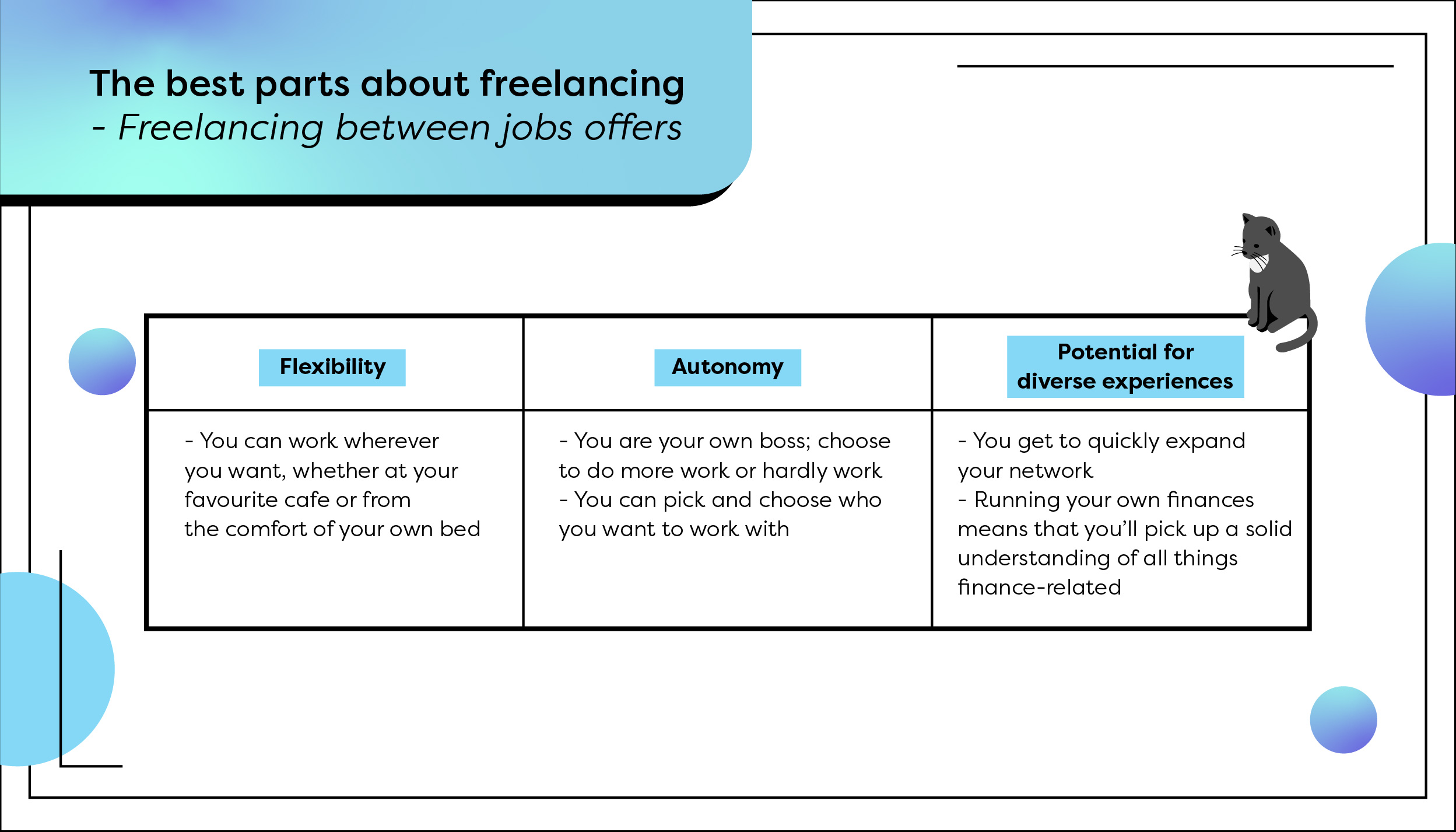
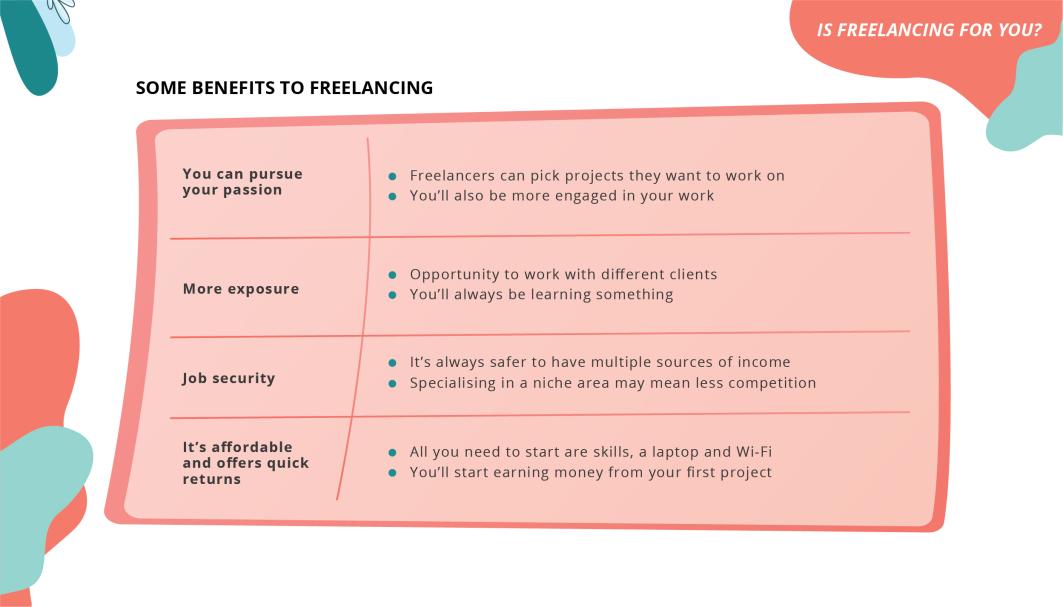
While the realities of freelancing show the tough side of the job, there’s a number of advantages as well. You’ll be able to work wherever you want, whether on holiday (like a cruise to nowhere) or from the comfort of your own home (or bed!).
You can even choose which clients and projects you want to pick up! If a heavier, but more highly paid project doesn’t strike your fancy for the moment, you can choose to forgo it in favour of a lighter, shorter-term project. Alternatively, if you want to pick a long-term, well-paid project, you can select to let go of a few smaller gigs as well.
Remember that freelancing can be both a long-term and a short-term solution. But whatever your reasons are to be a freelancer, don’t allow yourself to be pressured into it, whether by seeing your peers quickly finding success or the tough job market COVID-19 has given you. Being a freelancer requires high dedication and passion to succeed, so if you have the heart for the work you’re going to go into, then being a freelancer may be a great career choice.